Reflective face in a laminate
A metallized surface can serve as one functional layer in a bubble, foam, woven, nonwoven, paper, or board-based insulation construction.
APPLICATION FIELD · Application
Metallized film layers for reflective insulation laminates where the installed assembly, air space, joining method, and local construction requirements all matter.
Discuss this application →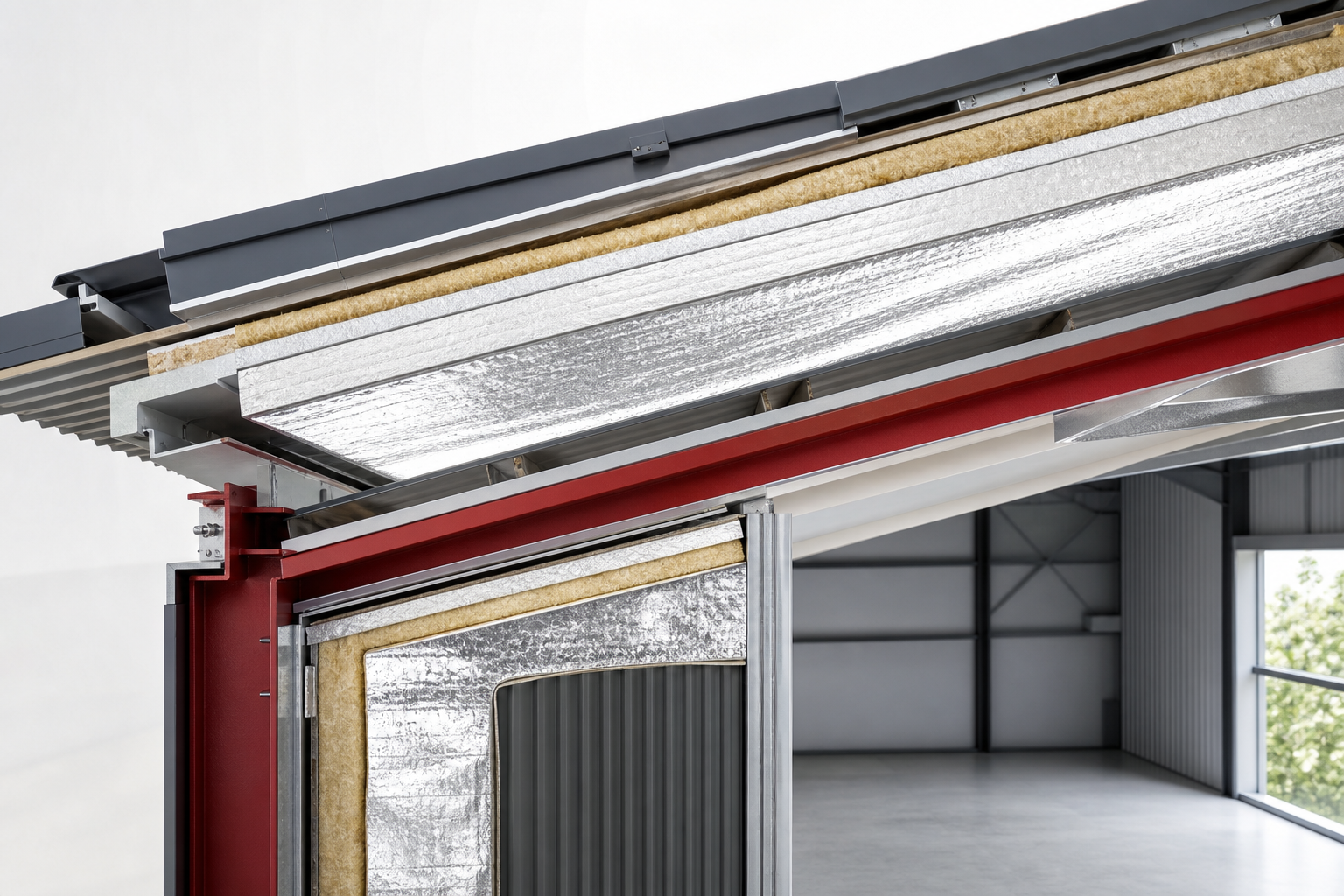
PROJECT NOTES
Reflective barrier layers that cut heat transfer in buildings, HVAC and agriculture films.
Tell us your converting line and we will match a metallized film grade to it.
WHAT MATTERS IN THE MATERIAL BRIEF
A metallized surface can serve as one functional layer in a bubble, foam, woven, nonwoven, paper, or board-based insulation construction.
The base film, adhesive, backing, and which side faces an air space should be discussed with the finished insulation build in mind.
Width, roll length, lamination route, slit tolerance, and packing should fit the converter’s line and finished panel or roll format.
TYPICAL APPLICATION CONTEXTS
These examples describe common finished-product contexts. The appropriate film construction still depends on the complete layer stack, conversion route, and required evaluation.
Reflective facings and roof-underlay or attic insulation laminates where the wider system is designed to manage radiant heat transfer.
Composite insulation materials that incorporate a reflective layer within the designed building envelope.
Laminated insulation products in which metallized film contributes a reflective surface alongside the carrier material.
FILM ROLE IN THE FINISHED STRUCTURE
Metallized PET or PE-based film can be laminated into reflective insulation products as a facing or internal layer. The film should be selected around the carrier material, adhesive system, handling requirements, and the reflective face required by the product design.
A reflective surface works differently from bulk insulation: its contribution depends on the complete construction and, in many radiant-barrier uses, an adjacent air space. Film alone does not establish an R-value, a building-code approval, or system-level thermal performance.
WHAT TO INCLUDE IN YOUR INQUIRY
Finished insulation structure and layer order
Which metallized face is exposed or enclosed
Backing, adhesive, reinforcement, or foam/bubble substrate
Installation environment and relevant local requirements
Roll width, roll length, and converting method
SUITABLE MATERIALS TO DISCUSS
VMMET INQUIRY
Share your application and the key material requirements. We will follow up at info@vmmet.com.
SEARCH VMMET